
How to Tell if Your Tree is Dormant or Dying
Posted
February 19, 2026
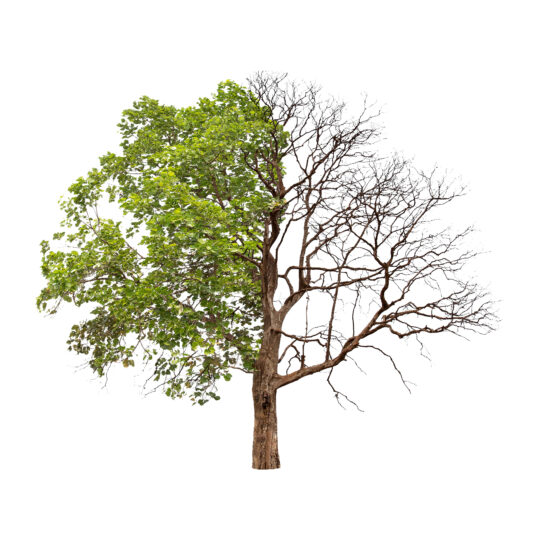
Many trees go dormant in the winter. They’ve shed their leaves and so their bare branches may look a little grim. But come spring, new buds, flowers, and fruit start to form. Or maybe they don’t. Here’s how to tell the difference between a dormant and dying tree.
What a Dormant Tree Looks Like
Trees naturally go through a period of rest to help conserve energy and withstand winter’s cold. However, a healthy dormant tree will still show subtle signs of life:
- Plump, visible buds at the tips of branches
- Flexible branches that bend without breaking
- Firm, solid bark without cracks or holes
These positive signs indicate that your tree is preparing for the spring growing season.
What a Dying Tree Looks Like
Unhealthy trees also have telltale signs. Some of these are easier to spot without the leaves.
- Leaves starting dropping before fall
- Thinning canopy
- Shriveled or absent buds
- Brittle branches that snap with little pressure
- Deep cracks in the bark or large missing pieces
- Fungal growth on the trunk
If you notice any of these symptoms, your tree may not bounce back in the spring. These signs of deterioration are evidence of a larger problem.
A certified arborist can help assess your tree and diagnose any issues you can or cannot see. Sometimes the culprit is tied to root problems, soil deficiencies, or hidden diseases. Once a professional evaluation is complete, you’ll have a better picture of your tree’s structure and health.
Whether your tree is dormant or dying, there are certain plant healthcare plans for maintaining health, addressing stress, improving conditions, and managing disease or pests. Even a struggling tree can have a chance of a recovery. What you notice now is key to providing the right care and ensuring your tree thrives when spring arrives.