
A Homeowner’s Guide to Winter Tree Protection and Removal in Chester County
Posted
November 16, 2026
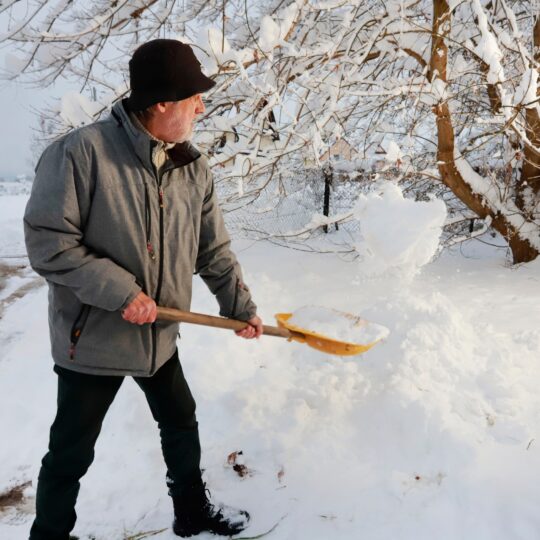
Winter reveals everything your trees spent the summer hiding. Without heavy foliage masking structural decay, an arborist can spot dangerous cracks, structural imbalances, and hollow trunks in seconds. Effective winter tree protection in Chester County, PA combines two essential strategies. First, arborists evaluate mature trees to determine whether they can be preserved with structural cabling, bracing, or selective pruning. Second, they identify compromised trees that pose an immediate risk before January ice storms arrive. When removal is necessary, the dormant season provides the cleanest and safest window of the year to complete the job.
What to Know
- Winter tree protection balances preserving valuable canopy trees through structural support like cabling with identifying hazardous trees that need removal before heavy storms hit.
- Frozen topsoil supports heavy machinery such as bucket trucks and cranes without causing the severe lawn rutting that is common during wet spring thaws.
- Leafless winter canopies give ISA Certified Arborists an unobstructed view of deadwood, structural cracks, and internal decay that summer foliage masks.
- Operations pause when limbs are heavily coated in ice because frozen wood becomes dangerously brittle and unpredictable under tension.
- If subsoil is frozen solid during a midwinter removal, stump grinding can be scheduled for the spring thaw without impacting the tree removal itself.
- Local rules vary, with several townships requiring formal permits or arborist reviews before removing mature canopy trees.
Why Is Winter a Good Time for Tree Removal in Chester County?
When autumn leaves fall, property owners may assume tree care pauses until spring. In reality, dormant-season operations come with distinct practical advantages over warmer months.
Late fall rains leave Southeastern Pennsylvania soils saturated, meaning heavy equipment parked on soft spring lawns can leave deep ruts. Frozen winter ground acts as a natural protective barrier, allowing heavy trucks to maneuver across yards without tearing up turf.
Without leaves obscuring the branches, arborists also gain a completely clear line of sight to spot hidden structural defects, fungal growth, and dead limbs. Furthermore, deciduous trees divert energy to their root systems in late fall. Removing trees while dormant minimizes root stress on neighboring plants. Because spring and summer bring peak demand and long waitlists, winter offers faster turnaround times and flexible scheduling for standard tree removal in Chester County.
What Happens During a Winter Tree Removal?
A professional winter removal follows a controlled, step-by-step process designed to protect surrounding structures and land.
- On-Site Assessment: An ISA Certified Arborist evaluates the tree’s health, lean, drop zone, and proximity to utility lines to pick the safest rigging method.
- Permit Check: Crews confirm whether your township requires tree removal approval or conservation review before work begins.
- Weather Scheduling: The team monitors freeze depth and wind forecasts to select the safest window for heavy machinery access.
- Rigging and Removal: Using a bucket truck, direct climbing, or a crane, arborists dismantle the tree section by section, lowering limbs into a controlled drop zone.
- Site Cleanup: Limbs are fed through wood chippers, logs are loaded, and remaining brush is cleared from driveways and gardens.
- Stump Grinding: If the topsoil is workable, grinding happens immediately; if the ground is frozen deep, grinding is scheduled for the spring thaw.
Featured Project: The Backyard Crane
During a job last January in Malvern, a homeowner needed a decaying 70-foot Red Oak removed from a tight backyard enclosed by custom landscaping. In April or May, heavy wheel ruts from a crane would have destroyed the saturated lawn, requiring thousands of dollars in turf repair.
Because the ground was frozen solid at 22°F, our crew positioned a 50-ton crane on the driveway, lifted 2,000-pound trunk sections directly over the house, and completed the job without leaving a single mark on the lawn.
When Will Crews Wait? Ice, Thaw, and Wind
While cold temperatures do not stop arborist crews, specific winter conditions make high-altitude tree work unsafe.
Ice adds massive weight to branches, dramatically increasing internal stress. Frozen wood becomes glass-like and brittle, making rigging behavior unpredictable. When ice coats the canopy, crews pause work until branches melt clear naturally.
Midwinter thaws present a different challenge. Warm spells can turn surface soil into mud while the subsoil remains frozen underneath. Equipment driven onto thawing ground will shear the turf, so machinery access is paused until the ground refreezes. High winds over 20 mph or sudden gusts also force delays to ensure climbing and crane precision.
If a severe winter storm causes an immediate structural threat during bad weather, crews deploy specialized stabilization methods through our 24-hour emergency tree service. For non-emergency projects, waiting for clear weather protects both workers and property. You can review safety thresholds in our detailed guide to removing a tree in winter.
How to Spot a Hazardous Tree
Proactive winter tree protection focuses on identifying structural weaknesses before snow loads or ice events cause a failure. Evaluating your canopy early helps you decide whether to preserve, support, or remove vulnerable trees before severe weather arrives.
Inspect your property for these critical warning signs of a hazardous tree:
- Large Dead Branches: Leafless branches that lack buds or shed bark are prone to snapping under heavy snow.
- V-Shaped Codominant Trunks: Stems growing in a tight V-shape often harbor included bark, creating a weak junction vulnerable to splitting in high winds.
- Structural Cracks or Cavities: Deep vertical fissures in the main trunk or hollow cavities compromise structural integrity.
- Basal Fungal Growth: Mushrooms or bracket fungi growing near the trunk base indicate internal root decay.
- Unusual Lean with Soil Heaving: A tree that leans suddenly or shows uplifted soil at its base requires immediate arborist inspection.
If you observe these indicators, consult an arborist to determine the best path forward. Valuable trees with minor structural defects can often be saved using cabling and bracing systems. Find out whether tree cabling is worth it for your property. When structural defects pose an immediate risk to your home, strategic removal is the safest option. For step-by-step assessment criteria, review industry guidance on recognizing tree risk.
Municipal Permits in Chester County
Permit regulations in Chester County depend on your specific municipality, zoning, and whether your property sits within a historic district or conservation zone.
Townships like Tredyffrin, Easttown, Willistown, and Birmingham maintain canopy protection ordinances and steep-slope conservation rules. Removing a tree within a public right-of-way or designated riparian buffer often requires township review or an arborist sign-off. Elite Tree Care helps homeowners navigate local municipal requirements during the initial estimate. Always verify local rules or consult an ISA Certified Arborist before starting major work.
Handling the Stump in Cold Weather
When a tree is removed midwinter, stump management depends on how deep the frost line extends.
If the top layer of soil is only lightly frozen, powerful stump grinders easily pulverize the stump and main root flare below grade. If prolonged sub-zero temperatures freeze the soil deep into the ground, grinding is deferred. The tree is cut flush to the ground in winter, and the crew returns during the spring thaw to finish the job.
Learn more on our stump grinding service page or read our article on stump removal in winter.
Schedule Winter Tree Services in Chester County
Planning tree care during late fall and early winter helps you avoid peak-season waitlists and protect your home before major winter storms arrive. Elite Tree Care does comprehensive winter tree work in Chester County, including in West Chester, Malvern, Exton, Paoli, Downingtown, Phoenixville, and Berwyn.
Contact us today at 610-935-2279 or request a free on-site estimate from a Certified Arborist.
Frequently Asked Questions
Is it cheaper to have a tree removed in the winter?
Winter removal can often be more cost-effective. Tree care companies experience variable scheduling during the dormant season, which can lead to faster turnarounds and potential off-peak rates depending on the project scope.
How much does it cost to take down a 30 ft tree?
In Chester County, taking down a 30-foot tree typically ranges between $450 and $1,200. Final pricing depends on proximity to structures, electrical hazards, equipment access, and whether stump grinding is included.
Do I need a permit to remove a tree in Chester County?
It depends on your township. Municipalities such as Tredyffrin, Easttown, and Willistown have specific ordinances regarding tree size, historic districts, or conservation zones. Always check local regulations before proceeding.
Can a tree be removed when there is snow on the ground?
Yes! Standard snow cover does not impede arborist operations. As long as branches are free of thick ice buildup and access routes are clear, tree removal proceeds normally.
Will winter tree removal damage my lawn?
Winter is typically the safest season for your lawn. Frozen ground supports heavy machinery without causing the surface rutting or soil compaction common during wet spring or summer months.
Download Your FREE Tree Removal Guide
Even dedicated DIYers should think twice before taking on the task of tree removal. Our guide will help you decide whether to hire a tree service and how to get the most value for your money.